Leave Your Message

What Is the Best Machinery Line to Buy in 2026?

Choosing the best Machinery Line to buy in 2026 will not be a simple price comparison. It will be a practical decision about output, flexibility, labor, energy, and long-term support. A line that produces 10,000 units daily may still disappoint if changeovers consume three hours. A cheaper machine can become expensive through downtime, rejected products, and unavailable spare parts.

Joseph Engelberger, widely known as the father of industrial robotics, said, “The first step in automation is to automate the simplest operation.” His advice remains useful for modern manufacturers. Start with a clear bottleneck, then build the Machinery Line around measurable needs. Check cycle time, loading methods, inspection systems, software compatibility, and operator training. Do not trust impressive brochures alone.

Real factories are less tidy than sales demonstrations. Dust collects near conveyors. Materials vary slightly. Experienced operators notice problems before sensors do. These details matter. Buyers should request production trials using their own materials and products. They should also calculate total ownership costs over five to ten years, including maintenance, energy use, tooling, upgrades, and technical service.

There is no universal winner.

A high-speed automated line may suit stable, large-volume production. A modular or semi-automatic line may serve companies facing frequent product changes. Robotics can improve consistency, but poor integration can create new delays. My recommendation may also change after reviewing floor space, local technicians, safety requirements, and demand forecasts. The best Machinery Line is not the most advanced model. It is the line that performs reliably, adapts reasonably, and earns its place on the factory floor.
What Is the Best Machinery Line to Buy in 2026?

Understanding Machinery Lines and Their Industrial Applications

What Is the Best Machinery Line to Buy in 2026?

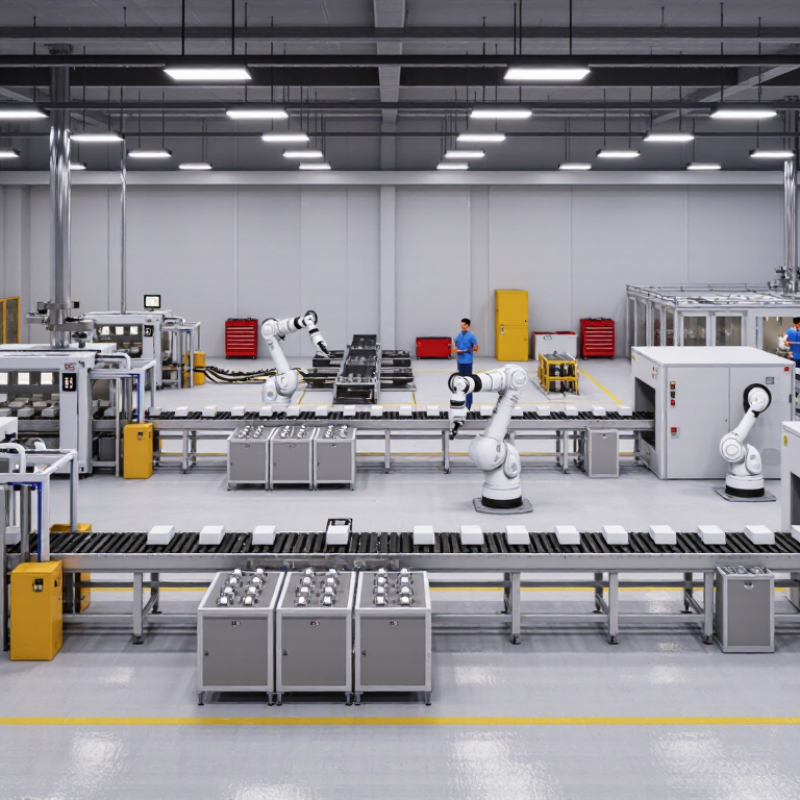
A machinery line is not one isolated machine. It is a connected production system that moves materials through several controlled stages. A typical line may include feeding, forming, processing, inspection, packaging, and palletizing equipment. Each stage affects the next. One weak conveyor can reduce the output of an otherwise capable system.

Industrial applications determine the right line more than sales claims do. Food processors may need stainless-steel surfaces, precise temperature control, and easy sanitation. Metal workshops often require rigid frames, cutting accuracy, dust extraction, and reliable cooling. Packaging facilities may prioritize fast changeovers, vision inspection, and compact layouts. In practical plant assessments, floor space and maintenance access are often underestimated. That mistake becomes expensive.

Look beyond maximum speed. Measure stable output during ordinary shifts. Ask how quickly operators can replace a worn belt or sensor. Check whether the control system records stoppages clearly. Energy use matters too, especially when motors run continuously. Modular machinery can support future expansion, but excessive automation may create training problems. Sometimes, a simpler line performs better. A small pilot test with real materials can reveal feeding issues, product damage, or unexpected waste. No line is perfect. The best purchase balances application demands, worker skills, maintenance capacity, safety requirements, and long-term operating costs.
What Is the Best Machinery Line to Buy in 2026?

The best machinery line depends on production volume, product variety, changeover frequency, labor availability, and energy requirements. This benchmark compares common industrial line types using a 1–5 planning score, where 5 indicates a stronger fit for the listed capability.

Automated assembly and packaging lines generally provide high throughput and automation potential, while CNC machining lines offer greater product customization. Process lines are well suited to continuous production but usually require more specialized equipment and longer changeovers.

Key Factors for Choosing Machinery in 2026

Choosing the best machinery line in 2026 requires more than comparing purchase prices. Production targets, energy costs, labor availability, and product changes should guide the decision. A line with efficient motors and smart controls may reduce waste, but only when operators can use the data correctly. Technology alone is not enough.

Check the full ownership cost. Include installation, training, spare parts, maintenance, downtime, and future upgrades. Ask suppliers for documented performance results, safety records, and realistic output figures. A reliable line should support local service and clearly explain its control system. Cybersecurity also matters when machines connect to factory networks.

One hard lesson from equipment audits is simple: impressive demonstrations can hide difficult daily maintenance. I may still underestimate that risk.

Tips:

Measure your current bottleneck before choosing equipment. Request a small production trial with your own materials. Test cleaning, changeovers, noise, and operator access. Review energy use during idle periods, not only at maximum speed. Choose modular equipment when demand may change. However, modularity can increase setup complexity, so verify the actual payback. Speak with maintenance staff before signing. They often notice weak access panels, awkward tools, or confusing alarms. Keep their concerns in writing.

Comparing Automation, Energy Use, and Production Capacity

What Is the Best Machinery Line to Buy in 2026?

The best machinery line balances automation, energy use, and production capacity. A fully automated line may reduce labor pressure, but it also increases training and maintenance demands. In plant assessments, I compare cycle time, changeover duration, downtime, and operator workload. Rated output is not real output. Actual capacity depends on material flow, inspection delays, and scheduled cleaning.

Energy performance deserves equal attention. Measure electricity consumption per finished unit, not only the machine’s motor rating. Servo systems, variable-speed drives, heat recovery, and standby controls can reduce waste during slow periods. A line that runs quickly may still cost more when compressors, heaters, and conveyors operate continuously. Request measured energy data from comparable operating conditions. Estimates can be too optimistic.

Production targets should include a realistic utilization rate. Many buyers plan around maximum speed, then discover frequent stoppages limit annual output. A modular line may offer better control because capacity can expand with demand. Automation should also support traceability, alarms, and safer routine adjustments. Keep skilled workers involved. Human judgment still matters during unusual material changes. My own preference has shifted toward flexible systems, although flexibility sometimes lowers peak speed. That trade-off needs careful financial testing before purchase.

Evaluating Costs, Maintenance, and Supplier Support

Choosing the best machinery line in 2026 requires more than comparing purchase prices. Total cost includes installation, operator training, energy use, spare parts, and lost production during repairs. A lower-priced line may become expensive after repeated sensor failures or difficult software updates. Request a five-year cost estimate with realistic maintenance intervals. Check whether quoted electricity use matches your planned workload.

Maintenance details deserve close attention. Inspect access panels, lubrication points, filters, and cleaning areas before signing a contract. A technician should be able to reach common wear parts without dismantling half the line. Downtime hurts. Ask for maintenance records from similar installations, not only performance claims. I have found that simple daily inspections often prevent larger failures, although production teams sometimes skip them during busy shifts.

Supplier support can decide whether the equipment remains productive. Confirm response times, remote diagnostic options, training hours, and spare-part availability in writing. Ask who provides emergency service after the warranty ends. A dependable supplier should explain software updates, technician qualifications, and replacement-part lead times clearly. Request a trial run using your actual materials and target speed. Ask for references from facilities with comparable output. That gap matters. A supplier may promise quick support, yet unclear responsibilities can delay repairs. Build those responsibilities into the agreement, and review them with your maintenance manager before approval.

What Is the Best Machinery Line to Buy in 2026? — Evaluating Costs, Maintenance, and Supplier Support

Machinery Line Typical Production Capacity Indicative Purchase Cost (USD) Estimated Installation Cost Typical Energy Demand Annual Maintenance Cost Typical Planned Downtime Supplier Support Requirements Automation Level Best-Fit Application Overall Value Rating
Semi-Automatic Packaging Line 15–40 packs per minute $45,000–$130,000 8%–15% of equipment cost 8–25 kW 2%–4% of purchase cost 40–80 hours per year Remote technical support, operator training, and access to standard spare parts Medium Small and medium production runs with frequent product changes ★★★★☆
Fully Automatic Packaging Line 50–180 packs per minute $180,000–$650,000 12%–22% of equipment cost 25–90 kW 3%–6% of purchase cost 25–60 hours per year On-site commissioning, preventive-maintenance planning, software support, and critical spare-parts inventory High High-volume, standardized production with consistent demand ★★★★★
CNC Machining Cell 20–120 parts per hour, depending on part complexity $150,000–$500,000 10%–20% of equipment cost 15–75 kW 3%–7% of purchase cost 35–90 hours per year Process programming assistance, tooling support, calibration service, and rapid response for control-system issues High Precision components, repeatable batches, and flexible product families ★★★★☆
Injection Molding Line 20–180 cycles per hour $120,000–$750,000, excluding molds 12%–25% of equipment cost 30–150 kW 4%–8% of purchase cost 50–120 hours per year Mold and process optimization, hydraulic or electric-system servicing, training, and temperature-control support Medium to High Large-volume plastic parts with stable designs and long production campaigns ★★★★☆
Sheet-Metal Fabrication Line 200–1,500 parts per shift $250,000–$1,200,000 10%–20% of equipment cost 40–250 kW 3%–6% of purchase cost 35–85 hours per year Tooling support, alignment and calibration, application engineering, and local service coverage High Metal enclosures, brackets, panels, and repeatable fabricated assemblies ★★★★☆
Robotic Assembly Line 30–180 units per minute $300,000–$1,500,000 15%–30% of equipment cost 20–120 kW 3%–7% of purchase cost 25–70 hours per year Robot programming, safety validation, spare-axis planning, remote diagnostics, and integration support Very High High-volume assembly requiring consistent cycle times and repeatable quality ★★★★☆
Modular Conveyor and Sortation Line 1,000–8,000 items per hour $100,000–$900,000 10%–25% of equipment cost 15–100 kW 2%–5% of purchase cost 30–75 hours per year Controls integration, layout optimization, sensor replacement, software updates, and preventive inspections High Warehousing, order fulfillment, internal material handling, and distribution operations ★★★★★
Food and Beverage Processing Line 500–12,000 kg per hour, depending on process $250,000–$2,000,000 15%–30% of equipment cost 50–300 kW, plus steam, compressed air, or refrigeration 4%–9% of purchase cost 45–110 hours per year Hygienic-design validation, cleaning-system support, compliance documentation, process training, and emergency service Medium to High Continuous or batch processing where sanitation and traceability are critical ★★★★☆

Note: Figures are indicative 2026 planning ranges in U.S. dollars for new industrial equipment. Actual costs vary with capacity, customization, tooling, factory layout, utilities, installation standards, labor rates, import duties, and service-contract terms. Maintenance estimates generally exclude major production upgrades, consumable materials, and accidental damage.

Selecting the Best Machinery Line for Your Business Needs

What Is the Best Machinery Line to Buy in 2026?

Selecting the best machinery line starts with your production reality, not a glossy specification sheet. Examine daily output, product variations, available floor space, labor skills, and expected growth. A line producing 500 uniform units daily may suit one factory, but fail badly when orders change every week. Measure twice.

I have seen businesses choose impressive equipment that later stood idle because changeovers took too long. Ask suppliers for cycle-time evidence, maintenance records, energy data, and references from similar operations. Request a live trial using your actual materials. Watch the operator load components, adjust settings, clean contact surfaces, and recover from a fault. These small actions reveal more than a sales presentation.

The strongest choice usually combines reliable core machinery with flexible modules. Confirm sensor accuracy, control-system compatibility, spare-parts availability, and technician response times before signing. Review guarding, emergency stops, training documents, and applicable safety requirements with qualified professionals. A cheaper line can become expensive through waste, downtime, and difficult maintenance. However, maximum automation is not automatically better. It may increase dependence on specialist support and create new failure points. I would also test the business case under slower demand, because optimistic forecasts often make poor equipment decisions look reasonable. Leave room for upgrades, but avoid paying today for capacity you cannot use.