Leave Your Message

China Top 10 Heavy Equipment Manufacturers for Global Buyers

China’s Heavy Equipment industry has moved from domestic scale to global influence. Chinese manufacturers now compete across excavators, cranes, loaders, bulldozers, mining trucks, and concrete machinery.

The 2024 Yellow Table, published by International Construction, placed XCMG and Sany among the world’s leading construction equipment manufacturers. Its rankings use manufacturer revenues, offering a useful starting point for international buyers. However, revenue alone cannot measure field reliability, parts availability, operator support, or long-term ownership cost.

The numbers are significant. Off-Highway Research continues to identify China as one of the world’s largest construction equipment markets and production bases. This scale supports extensive supplier networks, faster product development, and competitive pricing. It also creates differences between brands, product families, and export regions.

A ranking is useful, but incomplete.

This guide reviews China’s top 10 Heavy Equipment manufacturers through a buyer-focused lens. It considers product coverage, international certifications, dealer networks, warranty practices, technology, and service responsiveness. A machine working on a dusty quarry site needs more than a strong specification sheet. It needs accessible filters, trained technicians, clear documentation, and reliable replacement parts.

Public reports provide valuable evidence, but some manufacturer claims require careful verification. Buyers should compare tested performance, total cost of ownership, financing terms, and local compliance requirements. Factory visits, reference checks, and independent inspections can expose practical weaknesses before a purchase is signed.

The companies discussed here are not identical. Some lead in cranes, others in earthmoving, mining, concrete, or compact equipment. Their global expansion is impressive, yet after-sales consistency remains an area worth examining closely. That honest comparison helps global buyers select equipment with confidence, not simply choose the lowest initial price.
China Top 10 Heavy Equipment Manufacturers for Global Buyers

CCMA Data: China’s 2023 Construction Machinery Exports Reached US$44.3 Billion

China Top 10 Heavy Equipment Manufacturers for Global Buyers

CCMA data shows China’s construction machinery exports reached US$44.3 billion in 2023. This figure reflects strong overseas demand for excavators, loaders, cranes, road equipment, and specialized machinery. China Customs trade statistics also recorded a broader recovery in industrial equipment shipments after supply-chain disruptions. The numbers are substantial.

For global buyers, export value is only one screening tool. A machine may arrive quickly, yet spare parts could take weeks. Check hydraulic component availability, engine emission certification, warranty terms, and local service capacity. Review factory test records and inspect welding, controls, and safety systems before shipment. These steps reduce costly downtime on muddy sites, quarries, and urban projects.

CCMA reports that overseas expansion remains an important direction for China’s construction machinery sector. However, export growth does not prove every supplier offers equal reliability. Reporting scopes can differ, and currency changes may influence the final value. Buyers should compare five-year operating costs, not only the purchase price. Ask for parts lists, maintenance intervals, operator manuals, and references from similar climates. Small details matter. A low-cost machine with weak technical support may become an expensive asset. More independent field data would improve market comparisons.
China Top 10 Heavy Equipment Manufacturers for Global Buyers

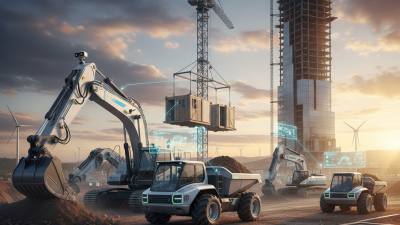
China’s construction machinery exports reached US$44.3 billion in 2023, highlighting the scale of the country’s heavy equipment manufacturing and global supply capacity.

Source: China Construction Machinery Industry Association (CCMA), 2023 export data.

Ranking the Top 10 Manufacturers by Revenue, Exports, Output, and Global Reach

China’s heavy equipment sector has expanded from domestic construction into major global supply chains. This ranking evaluates ten leading manufacturers by revenue, exports, output, and international reach. Revenue shows commercial strength, but it does not tell the whole story. Export value and shipment volume reveal stronger evidence of overseas demand.

The assessment combines annual reports, customs data, production disclosures, and distributor coverage. It also considers excavators, loaders, cranes, mining trucks, and road machinery. Output capacity matters when buyers need stable deliveries for large infrastructure projects. Global reach is measured through service centers, spare-parts warehouses, trained technicians, and equipment operating across multiple regions.

Field experience adds another layer. A machine working reliably at a dusty quarry may reveal more than a polished brochure. However, public data can be incomplete or delayed. Some private manufacturers disclose limited financial information. Exchange rates can also distort revenue comparisons between companies. That weakness deserves attention.

Export performance often separates established producers from fast-growing challengers. A manufacturer may ship thousands of units but lack local maintenance support. Another may have lower output yet offer stronger regional service. Buyers should examine warranty response times, parts availability, operator training, and resale records before placing large orders. Price alone is a poor ranking tool.

Profiles of the Top 10: Excavators, Cranes, Loaders, and Bulldozers

China’s top ten heavy equipment manufacturers serve global buyers through excavators, cranes, loaders, and bulldozers. Their portfolios range from compact machines for urban projects to mining equipment built for long shifts. Buyers should compare hydraulic performance, operating weight, fuel use, attachment options, and service support.

Three leading manufacturers focus on crawler and wheeled excavators. Their strengths include precise controls, reinforced frames, and engines suited to dusty sites. Two crane producers offer truck cranes and crawler cranes, with lifting capacities designed for construction, energy, and infrastructure work. Loaders from two major manufacturers emphasize bucket durability, fast cycle times, and comfortable cabins. Two bulldozer specialists build machines with strong undercarriages and adjustable blades. One diversified manufacturer combines several categories, which can simplify fleet purchasing.

Specifications can look impressive on paper. Field conditions often tell a different story. A buyer should request working videos, parts lead times, warranty terms, and regional technician coverage. Check the machine’s performance at the actual altitude, temperature, and soil type. A lower purchase price may hide costly downtime. I would also inspect weld quality, hose routing, cabin visibility, and emergency controls before ordering. Some evaluations remain incomplete without an independent inspection. That is an uncomfortable, but useful, limitation. Reliable suppliers explain weaknesses clearly and provide documented testing, operator training, and maintenance schedules. Their credibility comes from consistent support after delivery, not from a catalogue alone.

Comparing R&D Investment, Emissions Compliance, Uptime, and Service Networks

China’s top ten heavy equipment manufacturers are best compared through evidence, not catalogue claims. R&D investment reveals long-term capability. Examine engineering staff, testing facilities, software development, and annual patent activity. A large budget helps, but spending quality matters more. Ask for field results from excavators, loaders, cranes, and mining trucks operating in similar climates.

Emissions compliance now affects purchasing decisions as much as engine power. Buyers should verify certification for the destination market, fuel requirements, after-treatment systems, and documentation. Laboratory approval is essential, yet daily maintenance can determine real emissions performance. A blocked filter or poorly trained technician may quickly reduce efficiency. This point is often underestimated.

Uptime depends on component durability, diagnostic tools, operator training, and parts availability. Request measured failure rates, scheduled maintenance hours, and warranty response times. Service networks should include regional warehouses, mobile technicians, digital support, and clear escalation procedures. A nearby dealer is useful, but coverage may weaken outside major cities. I would also inspect one working machine before signing a fleet contract. Brochures cannot show cold starts, hydraulic delays, or how quickly a technician arrives. Some comparisons remain imperfect because manufacturers report performance differently. That limitation deserves attention, especially when purchase prices appear unusually attractive.

Choosing a Supplier by Total Cost, Warranty, Parts, Financing, and Risk

China Top 10 Heavy Equipment Manufacturers for Global Buyers

A top-ten ranking is only a starting point. The 2024 Yellow Table, published by International Construction, compares manufacturers by construction-equipment revenue. It does not measure lifetime ownership cost, warranty quality, or parts availability. Buyers should request a five-year cost model. Include purchase price, freight, customs, fuel, scheduled maintenance, downtime, and resale value. A cheaper machine can become expensive after one failed hydraulic component.

Warranty terms need close inspection. Ask whether labor, travel, seals, electronics, and wear parts are covered. Confirm response times in writing. The dealer should provide parts stock levels and average delivery times for critical components. A 2024 global construction outlook from Deloitte highlights continuing supply-chain pressure and digital service growth. Remote diagnostics may reduce downtime, but only with stable connectivity and trained technicians. That detail is easy to overlook.

Tips: Ask for three references in your region. Call the owners, not only the sales team. Test the machine under local soil, weather, and load conditions. Compare financing by total repayment, currency exposure, fees, and early-payment rules. Require a clear warranty escalation process. Keep a small reserve for unexpected repairs. My practical concern is simple: supplier promises often sound stronger than contract language. Read every exclusion. A perfect spreadsheet is impossible, but a documented decision is far safer.

China Top 10 Heavy Equipment Manufacturers for Global Buyers — Choosing a Supplier by Total Cost, Warranty, Parts, Financing, and Risk
Anonymous supplier-screening matrix for export buyers. Values are indicative commercial benchmarks for comparable equipment categories and should be verified in a signed quotation, warranty schedule, parts agreement, and financing term sheet.
Rank Anonymous Supplier Profile Primary Equipment Coverage Typical Export Order Size Indicative Factory-Price Position Estimated 5-Year Total-Cost Index* Standard Warranty Structure Parts Availability Model Typical Parts Lead Time Financing Options Commonly Offered Documentation & Compliance Readiness Buyer Risk Level Best Fit for Global Buyers
1 Supplier Profile A Large excavators, wheel loaders, motor graders, mining-support equipment 5–20 units Competitive to mid-market 100–108 12 months or 2,000 operating hours; exclusions and maintenance obligations apply Regional distributors plus central export warehouse 7–21 days for routine items; 30–90 days for major components 30% deposit / 70% before shipment; documentary credit; selected export-credit arrangements Strong standard manuals, parts lists, inspection files, and customs documentation Low–Medium Fleet buyers seeking a balanced purchase price, support structure, and resale potential
2 Supplier Profile B Compact and medium excavators, skid-steer loaders, backhoe loaders 2–10 units Low to competitive 96–105 12 months or 1,500–2,000 operating hours Dealer-led support with factory ordering for non-stock items 10–30 days for common parts; 45–100 days for special orders Deposit-based terms; telegraphic transfer; limited leasing through local partners Generally adequate; buyers should confirm local emissions, safety, and operator-certification requirements Medium Rental fleets, contractors, agriculture, municipal work, and price-sensitive projects
3 Supplier Profile C Wheel loaders, articulated dump trucks, rigid hauling equipment 3–15 units Mid-market 101–110 12 months or 2,000 hours, with separate powertrain terms in some contracts Dedicated parts export desk and distributor stocking program 7–25 days for wear parts; 45–120 days for drivetrain components Bank-backed trade finance; staged payments linked to inspection and shipment Good export packaging, serial-number records, and pre-shipment inspection support Low–Medium Quarries, infrastructure contractors, ports, and bulk-material operations
4 Supplier Profile D Road rollers, asphalt pavers, concrete equipment, road-maintenance machinery 2–12 units Competitive 98–107 12 months or 1,500 operating hours; consumables normally excluded Project-based parts kits with optional commissioning support 14–35 days for routine components; 60–120 days for hydraulic or electronic modules Progress payments; confirmed letter of credit; project-linked financing subject to approval Good technical files; verify road-safety, electrical, and environmental requirements by destination Medium Road-building projects with defined delivery schedules and planned spare-parts packages
5 Supplier Profile E Small and medium crawler excavators, mini loaders, attachments 1–8 units Value-oriented 95–106 12 months or 1,000–2,000 operating hours Online parts ordering, dealer stock, and factory-direct supply 10–28 days for fast-moving items; 45–90 days for assemblies Cash against documents, deposit terms, and occasional distributor credit Basic to good; confirm translated manuals, spare-parts coding, and conformity documents Medium Small contractors, landscaping, utilities, farms, and urban construction
6 Supplier Profile F Mining loaders, heavy excavators, haulage and material-handling systems 1–10 units Mid-market to premium 105–118 12 months or 2,000–4,000 hours; negotiated uptime and component coverage may be available Site-based inventory, regional warehouse, and planned maintenance contracts 5–20 days for stocked items; 45–120 days for major assemblies Structured project finance, milestone payments, export insurance, and bank instruments Strong when purchased as a project package; site acceptance and commissioning should be contractually defined Medium Mining and bulk-material buyers able to commit to service planning and minimum fleet volumes
7 Supplier Profile G Forklifts, warehouse equipment, reach trucks, container-handling machines 3–30 units Competitive 99–109 12 months or 2,000 operating hours; batteries and tires often have separate terms Dealer network with consumables and service kits held locally 7–21 days for routine parts; 30–75 days for electrical systems Leasing, installment purchase, trade credit through distributors, and standard bank finance Good product documentation; verify load ratings, safety labels, and local warehouse regulations Low–Medium Warehousing, logistics, manufacturing, ports, and distribution centers
8 Supplier Profile H Crane-related equipment, aerial work platforms, telehandlers, lifting accessories 1–10 units Mid-market 103–115 12 months or 1,000–2,000 hours; safety-critical components require detailed exclusions Authorized service partners and order-based factory supply 14–35 days for common parts; 60–120 days for control and lifting systems Leasing and installment terms may be available through approved local finance providers Must be checked carefully against local lifting, workplace-safety, and inspection rules Medium Buyers with strong compliance teams and access to qualified local service technicians
9 Supplier Profile I Concrete pumps, batching plants, mixers, construction-site systems 1–6 complete systems Competitive to premium 104–116 12 months or 1,500–2,000 hours; installation and commissioning terms should be separated Project-specific spare-parts package plus regional technical support 14–40 days for wear parts; 60–150 days for specialized assemblies Milestone payments, documentary credit, project finance, and installation-linked retention Good for engineered projects; confirm foundation, electrical, training, and commissioning documents Medium Commercial construction and infrastructure projects with technical supervision
10 Supplier Profile J Special-purpose equipment, agricultural construction machines, customized attachments 1–5 units Value-oriented to competitive 97–112 12 months; customized components may have limited warranty coverage Factory-direct parts supply with optional recommended-spares package 21–45 days for routine parts; 60–150 days for custom components Deposit and balance-before-shipment terms; financing depends heavily on buyer country and bank approval Variable; require drawings, risk assessments, manuals, conformity evidence, and spare-parts lists before payment Medium–High Specialized buyers able to validate engineering, maintain inventory, and manage technical risk
How to read the table: The estimated five-year total-cost index uses 100 as a reference point for a comparable purchase and combines indicative acquisition cost, freight and import handling, scheduled maintenance, normal wear parts, downtime exposure, and resale considerations. It is not a quoted price or audited financial result.

Warranty note: Heavy-equipment warranties commonly depend on operating hours, maintenance records, approved lubricants, component exclusions, and authorized service procedures. Buyers should obtain the complete warranty schedule before placing an order.

Risk-control checklist: Verify factory registration, export history, beneficial ownership, sanctions and customs requirements, third-party inspection, serial-number records, parts pricing, service response time, payment security, Incoterms, insurance responsibilities, and dispute-resolution jurisdiction.