Leave Your Message

7 Best Sany Equipment Models for Global Buyers

Choosing heavy machinery for an international project requires more than comparing prices. Buyers must examine productivity, operating weight, fuel use, operator comfort, safety systems, and after-sales support. This guide introduces seven Sany Equipment models that serve construction, mining, roadwork, lifting, and concrete applications. Each model is considered through practical jobsite questions, not brochure claims alone.

A machine working beside a dusty highway faces different demands from one operating near a crowded port. Ground conditions, transport limits, climate, local regulations, and spare-parts access can change the best choice. Excavators may impress through digging force, while cranes must prove stability, reach, and control under real workloads. Concrete equipment also deserves careful review, especially when delivery speed affects an entire project.

Specifications matter.

So does support.

The comparison focuses on useful details, including machine size, engine performance, hydraulic response, maintenance access, and dealer reliability. It also considers the total ownership picture, from tires and filters to technician training and planned downtime. Manufacturer data provides an important starting point, but independent inspections and local service feedback remain valuable. Some conclusions may differ between regions. That is unavoidable. A model suited to a large quarry may be excessive for a compact urban site. Buyers should verify current specifications, certifications, warranty terms, and availability before ordering. No ranking is perfect, and real operating conditions can expose weaknesses that a test sheet misses. Still, these seven models offer a practical foundation for comparing Sany Equipment with the demands of modern global projects.
7 Best Sany Equipment Models for Global Buyers

SANY’s Global Position in KHL’s 2024 Yellow Table Rankings

KHL’s 2024 Yellow Table places the Chinese construction-equipment manufacturer in sixth position worldwide. The ranking uses annual equipment sales, not job-site productivity or customer satisfaction. That distinction matters. A strong revenue position shows scale, market access, and manufacturing capacity. It does not automatically prove that every machine suits every project.

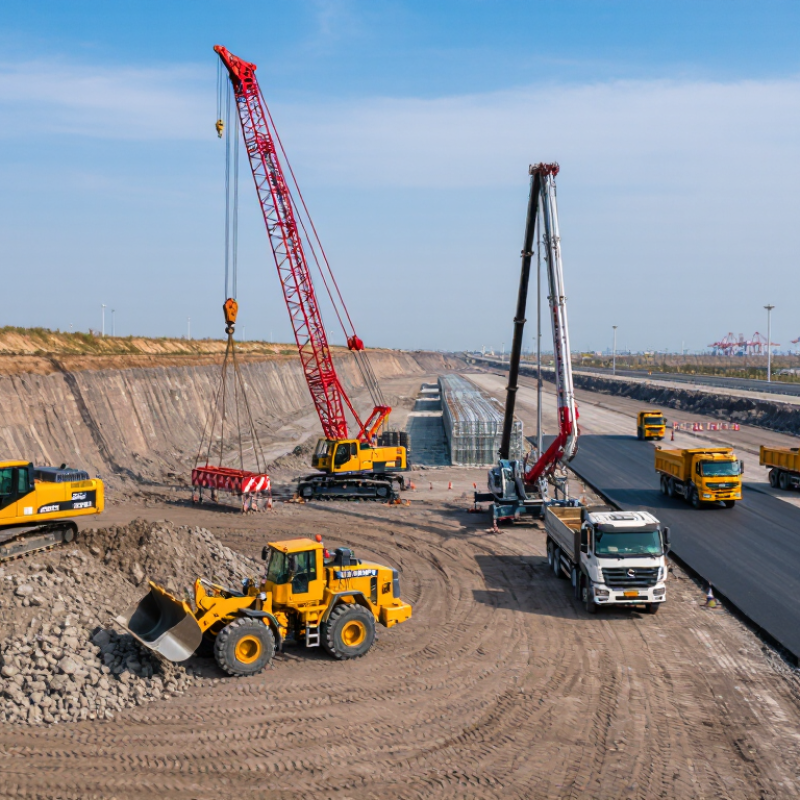
Global buyers can examine seven practical equipment groups: crawler excavators, wheel loaders, truck cranes, all-terrain cranes, rough-terrain cranes, piling rigs, and concrete pumps. Each group serves a different working scene. A crawler excavator may handle wet soil and uneven foundations. A wheel loader fits quarry yards and material stockpiles. A truck crane offers easier road movement between urban sites. Concrete pumps need careful attention to hose reach, cleaning routines, and local service support.

Real purchasing decisions require more than a ranking. Buyers should compare rated capacity, fuel use, hydraulic response, operator visibility, and spare-parts availability. Ask for service records. Check regional dealer response times. A machine can look impressive in a brochure yet feel less convincing after six months of hard use. That is an uncomfortable possibility.

The Yellow Table provides useful market evidence, especially for buyers comparing global suppliers. Still, sales data can reflect currency changes, large contracts, or regional demand. It cannot replace an on-site demonstration. Test the machine with real soil, real loads, and ordinary operators. That test often reveals small weaknesses that polished specifications hide.

7 Best Sany Equipment Models for Global Buyers - SANY’s Global Position in KHL’s 2024 Yellow Table Rankings

A practical comparison of widely marketed equipment models, selected for versatility, output, and suitability across international construction markets.

Equipment Model Equipment Category Operating Weight / Rated Capacity Engine Power Key Published Capability Typical Global Applications
SY135C 13–14 tonne crawler excavator Approximately 13,500 kg Approximately 73 kW Maximum digging depth of approximately 5.5 m; bucket capacity commonly around 0.6 m³ Urban excavation, utility work, road maintenance, site preparation, and general earthmoving
SY215C 21–22 tonne crawler excavator Approximately 21,900 kg Approximately 114 kW Maximum digging depth of approximately 6.6 m; bucket capacity commonly around 1.0 m³ Quarrying, infrastructure construction, bulk excavation, drainage, and general contracting
SY365H 35–37 tonne crawler excavator Approximately 35,000 kg Approximately 212 kW Maximum digging depth of approximately 7.0 m; bucket capacity commonly around 1.6 m³ Large-scale earthworks, mining support, quarry operations, highway construction, and heavy excavation
SY500H 49–51 tonne crawler excavator Approximately 49,500 kg Approximately 280 kW Maximum digging depth of approximately 7.1 m; bucket capacity commonly around 2.5 m³ Mining, major quarrying, large infrastructure projects, high-volume loading, and deep excavation
SR155 Rotary piling rig Approximately 48,000 kg Approximately 250 kW Maximum drilling diameter of approximately 1.5 m; maximum drilling depth up to approximately 56 m Bridge foundations, commercial buildings, transport infrastructure, diaphragm-wall support, and deep foundations
STC250T5 25-tonne truck crane Rated lifting capacity: 25,000 kg Approximately 221 kW Telescopic boom length commonly up to approximately 40.5 m, depending on configuration Building construction, equipment installation, municipal work, maintenance, and mobile lifting operations
SCC800A 80-tonne crawler crane Rated lifting capacity: 80,000 kg Approximately 212 kW Lattice boom configurations commonly extend to approximately 58 m, depending on the setup Industrial construction, wind and power projects, bridge work, steel erection, and heavy component lifting

Note: Specifications can vary by market, emissions standard, attachment, counterweight, and configuration. Always confirm the final regional specification with the applicable product documentation.
SY215C and SY365H: Excavator Productivity Across 20–40-Ton Classes

SY215C and SY365H: Excavator Productivity Across 20–40-Ton Classes

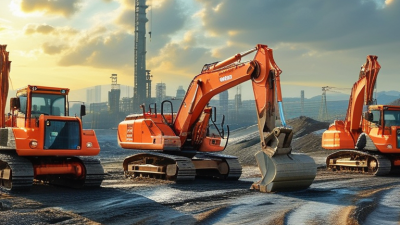
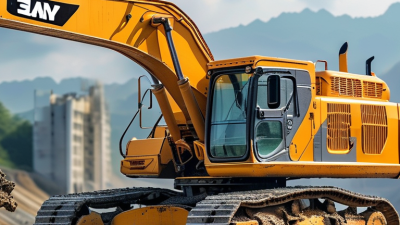
GlobalData’s 2024 construction outlook forecasts roughly 3% annual growth through 2028. That expansion increases pressure on excavator productivity, not just purchase price. In the 20–25-ton class, SY215C suits general excavation, utility work, and medium-scale earthmoving. Its smaller operating footprint can reduce repositioning time on confined sites. SY365H targets the 35–40-ton range, where deeper digging, heavier loading, and larger buckets become practical. Bigger is not automatically faster.

Field productivity depends on cycle time, operator control, haul distance, and soil conditions. Off-Highway Research identifies excavators as the leading mobile-equipment segment by unit demand. That suggests broad market acceptance, but it does not guarantee strong site performance. The 2024 EquipmentWatch Cost Recovery report also highlights fuel, maintenance, and depreciation as major ownership costs. Buyers should compare hourly output against total operating cost. A low purchase price may hide expensive downtime.

SY215C can work well on road shoulders, drainage corridors, and building foundations. SY365H is better suited to quarry loading, mass excavation, and large infrastructure cuts. Match the machine to the truck fleet. Otherwise, waiting becomes the real bottleneck. Regional specifications, attachments, hydraulic options, and service support require careful verification. Manufacturer productivity figures are useful benchmarks, not promises. Actual results can vary sharply. That part deserves more testing.

SY500H and SR155: Heavy Excavation and Rotary Drilling Benchmarks

The SY500H and SR155 represent two demanding benchmarks for global buyers: heavy excavation and rotary drilling. The SY500H sits in the roughly 50-ton excavator class, offering the stability needed for deep cuts, quarry loading, and large foundation work. Its hydraulic system must balance breakout force with fuel control during long shifts. That balance matters. Operator habits can change real productivity by 10% or more.

Heavy excavation
meets rotary drilling

The SR155 targets rotary drilling projects where torque, mast stability, and transport planning directly affect output. Its 155 kN·m-class torque suits many bored-pile applications, while published drilling depth and diameter depend on tools, soil, and casing methods. KHL’s 2024 Yellow Table reported global construction-equipment sales of 243.4 billion dollars in 2023, down 2.6% year on year. Buyers therefore need measurable value, not impressive brochures. I would not treat maximum capacity as daily production. That assumption often fails on congested sites.

Tips: Compare fuel use, cycle time, transport weight, and service access together. Request independent field records from similar soil conditions. Check hydraulic performance after warm-up, not only during demonstrations. Keep spare filters and wear parts locally available. A small delay becomes expensive quickly. Also, published specifications can vary by configuration and regional regulation. Confirm every figure before ordering.

STC250T5 and SAC6000: Crane Capacity, Safety Standards, and CE Compliance

For global buyers, STC250T5 and SAC6000 should be judged by working configuration, not headline capacity. STC250T5 is generally positioned in the 25-ton class, while SAC6000 is a 600-ton class all-terrain crane. Actual lifting performance changes with boom length, working radius, counterweight, ground pressure, and wind conditions. A neat brochure number can mislead.

On a site visit, check the load chart inside the operator’s cabin. The chart should match the supplied boom, ballast, outriggers, and lifting accessories. Confirm that rated capacity indicators, overload protection, emergency stops, and anti-two-block devices function correctly. Small warning labels matter. So does visibility around the carrier. SAC6000 projects require carefully engineered ground support, transport planning, and qualified assembly supervision. STC250T5 still needs disciplined setup, especially on narrow urban roads or uneven surfaces.

For European projects, CE compliance should include traceable technical documentation, a risk assessment, operating instructions, and an EU Declaration of Conformity. CE marking alone is not proof of lifting quality. Buyers should compare the declared standards with the crane’s actual configuration and intended use. Independent inspection before delivery is wise, though it adds time and cost. I have seen schedules pressure teams into skipping document checks; that is a poor trade. Local registration, operator licensing, and site-specific safety rules may also apply.

7 Global Crane Capacity Classes: Rated Capacity, Safety Standards and CE Compliance

Nominal rated-capacity benchmarks used across mobile, crawler and heavy-lift crane applications.

The chart compares seven commonly referenced nominal lifting-capacity classes, from 25 tonnes to 6,000 tonnes. Actual capacity depends on load radius, boom configuration, counterweight, ground conditions and the manufacturer's load chart. Safe operation should follow applicable requirements such as EN 13000 for mobile cranes, ISO 4309 for wire-rope inspection and ISO 12480-1 for lifting operations. CE marking indicates conformity with applicable European Union requirements; it does not guarantee a specific lifting capacity or replace site-specific risk assessment.

SYM5441TH: Concrete Pump Output, Fleet Telematics, and TCO Metrics

For global buyers, the SYM5441TH should be assessed beyond its 44-meter placing reach. Concrete pump output is usually quoted in cubic meters per hour, but site performance varies. Mix design, pipeline length, pour height, and operator skill can reduce real output. I would record hourly production during several pours, not rely on one brochure figure. That field evidence is more useful.

Fleet telematics adds another layer of control. Track engine hours, pump cycles, idle time, fuel consumption, location, and fault alerts. A dashboard can show whether a truck is working or simply waiting beside a congested site. Maintenance reminders also support safer planning and fewer surprise stoppages. Still, data quality is not perfect. Poor connectivity or incorrect operator inputs can distort reports.

Tips: Compare total cost of ownership over five years. Include fuel, scheduled service, tires, insurance, financing, depreciation, and lost revenue during downtime. Ask for local parts availability and technician response times. My first TCO estimate once looked attractive until idle hours and hose replacement were added. Recheck those assumptions. A slightly higher purchase price may be justified if uptime, resale value, and measurable output remain strong. Use local fuel prices and actual project distances, not optimistic averages.