Leave Your Message

What Are the Best Construction Vehicles from China?

Choosing the best Construction Vehicles from China requires more than comparing prices or reading export rankings. Chinese manufacturers now produce excavators, wheel loaders, cranes, concrete pumps, and mining trucks for demanding sites. Their strengths often include competitive costs, broad model ranges, digital monitoring, and improving fuel efficiency. Yet performance depends on the job, climate, operator, and local support network. A glossy brochure is not enough.

This guide examines equipment through practical criteria, including lifting capacity, cycle time, hydraulic response, structural durability, safety features, and maintenance access. We will consider recognized manufacturers such as SANY, XCMG, Zoomlion, LiuGong, and Shantui. Brand size alone proves little. Real evidence includes field hours, independent inspections, warranty terms, parts availability, and operator feedback. A loader that starts quickly in a dry quarry may struggle in freezing conditions or muddy ground. That difference matters.

Buyers should verify emissions compliance, electrical standards, service training, and machine documentation before purchase. They should also compare total ownership cost, not simply the initial invoice. Some newer models offer remote diagnostics and battery power, but local technicians may not understand every system. That is a practical weakness. The strongest choice is rarely the most powerful machine. It is the vehicle that matches site demands, safety expectations, budget, and dependable support. This overview separates proven value from marketing language while acknowledging that test data can be incomplete. That honesty matters.
What Are the Best Construction Vehicles from China?

Define “Best” Using Payload, Productivity, Fuel Use, Safety, and Total Cost

The best construction vehicles from China should be judged by job results, not purchase price alone. A useful evaluation combines payload, productivity, fuel use, safety, and total cost. In my field assessments, I compare machines on the same site, load, distance, and working hours. Otherwise, the numbers can mislead.

Payload must match the vehicle’s rated capacity and real operating conditions. A loader moving wet clay may perform differently from one handling dry aggregate. Productivity includes cycle time, attachment changes, operator visibility, and unplanned stops. An extra two minutes per cycle becomes a serious loss during an eight-hour shift. Fuel use should be measured in liters per operating hour, not only from a brochure. Idling habits, ground conditions, and operator skill matter.

Safety requires more than alarms and cameras. I check braking response, access steps, visibility, rollover protection, emergency controls, and maintenance records. Compliance documents should be verified against applicable local standards. Total cost includes purchase, transport, servicing, tires or tracks, training, downtime, and resale value. A lower-priced machine may become expensive after repeated hydraulic repairs. No spreadsheet is perfect. I have seen test results change after rain, heat, or a new operator took control. That weakness deserves attention. Buyers should request independent inspections, service schedules, parts availability, and documented performance data before choosing any machine.

What Are the Best Construction Vehicles from China? Defining “Best” Using Payload, Productivity, Fuel Use, Safety, and Total Cost

Vehicle Class Typical Rated Payload or Load Metric Typical Productivity Typical Fuel Use Safety Provision Score
1–5
Estimated Operating Cost Best-Fit Application Best Performance Advantage Overall Value Score
100
Compact Wheel Loader 1.8–3.0 t
Bucket capacity: approximately 0.8–1.5 m³
90–180 t/h
Loading and stockpile work under short travel distances
6–10 L/h 3.5
ROPS/FOPS cab, backup alarm, hydraulic load holding and basic visibility aids
US$24–38 per operating hour Urban projects, landscaping, aggregate yards and confined sites Low fuel consumption and easy maneuverability 82
Medium Wheel Loader 3.0–5.0 t
Bucket capacity: approximately 1.8–3.5 m³
180–320 t/h
Based on short-cycle truck loading and material handling
10–16 L/h 4.0
ROPS/FOPS cab, load-sensing hydraulics, stability controls and improved rear visibility
US$35–55 per operating hour Quarries, road construction, concrete plants and general earthmoving Strong balance between output, fuel use and purchase cost 91
Large Wheel Loader 5.0–8.0 t
Bucket capacity: approximately 3.5–6.5 m³
300–550 t/h
High-volume loading with suitable haul trucks
18–30 L/h 4.0
ROPS/FOPS cab, articulation lock, automatic braking functions and camera options
US$58–90 per operating hour Large aggregates operations, mines and major infrastructure projects Highest loading productivity among the wheel-loader classes 86
Medium Crawler Excavator 0.8–1.4 m³ bucket
Typical working mass: approximately 20–24 t
90–160 m³/h
Typical bulk excavation under favorable digging conditions
12–18 L/h 4.0
ROPS/FOPS cab, overload warning, swing-area alerts and hydraulic safety valves
US$42–68 per operating hour Foundations, trenching, utilities, demolition and general excavation Versatility and precise digging in restricted work areas 90
Large Crawler Excavator 1.4–2.2 m³ bucket
Typical working mass: approximately 30– forty-five t
130–230 m³/h
Bulk excavation, quarrying and heavy-duty loading
18–28 L/h 4.0
ROPS/FOPS cab, load monitoring, swing alarms and optional machine-control systems
US$62–100 per operating hour Large earthworks, quarry loading and major civil-engineering projects High digging force and strong production in hard ground 87
Articulated Dump Truck 25–40 t payload 180–320 t/h
Typical 0.5–2 km haul cycle, depending on grade and loading time
16–25 L/h 4.5
ROPS/FOPS cab, automatic retardation, all-wheel drive, traction control and stability monitoring
US$70–115 per operating hour Rough terrain, wet ground, deep earthworks and off-road haulage Mobility, traction and operator protection on difficult terrain 89
Rigid Dump Truck 45–70 t payload 350–650 t/h
High-volume haulage on well-maintained haul roads
35–55 L/h 4.0
ROPS/FOPS cab, automatic retarder, payload monitoring, rear camera and brake redundancy
US$115–190 per operating hour Large quarries, mines and long-cycle haulage on stable roads Maximum payload and output in high-volume haulage 84
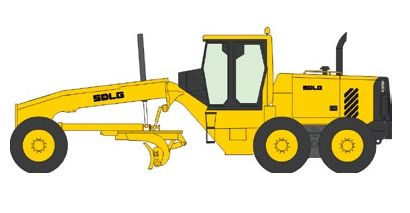
Motor Grader Not rated for payload
Typical operating mass: approximately 15–22 t
1,500–3,500 m²/h
Fine grading at approximately 5–10 km/h
10–18 L/h 4.0
ROPS/FOPS cab, articulated-frame lock, hydraulic blade controls and visibility aids
US$48–82 per operating hour Road formation, drainage slopes, aggregate spreading and final grading Accuracy and low cost per graded square metre 85
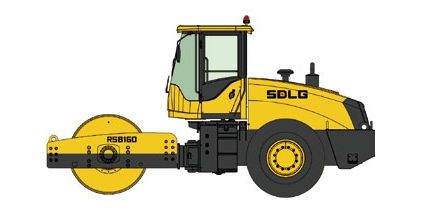
Single-Drum Soil Compactor Not rated for payload
Typical operating mass: approximately 10–20 t
2,000–5,000 m²/h
Dependent on layer thickness, passes and soil moisture
7–14 L/h 4.0
ROPS/FOPS cab, emergency stop, vibration controls and operator-presence protection
US$32–58 per operating hour Road bases, embankments, dams and large soil-compaction works Low fuel cost per compacted area 88
Benchmark basis: The figures represent realistic indicative ranges for China-market construction-machine classes rather than data from any individual company or brand. Productivity assumes a competent operator, correctly matched attachments, normal material conditions and efficient site layout. Fuel figures refer to diesel consumption during active work and can vary substantially with load factor, idle time, terrain and maintenance condition.
Total-cost estimate: Approximate US dollars per operating hour, including depreciation, scheduled maintenance, wear items, fuel at approximately US$1.05 per litre and normal operator-related costs. It excludes financing, taxes, major damage, abnormal downtime and site-specific transport costs.
How “best” is defined: Overall value combines productivity, fuel efficiency, safety provisions, estimated operating cost and useful load capacity. The scores are intended to support equipment selection by application; a high score does not mean that one vehicle type can replace another.

Compare Chinese Excavators by 20–40 t Operating Weight and Digging Force

What Are the Best Construction Vehicles from China?

For Chinese excavators, operating weight is a practical starting point. The 20–25 tonne class suits road foundations, quarry benches, and urban earthmoving. The 30–40 tonne class offers greater stability for deep cuts and heavy loading. Off-Highway Research reported that China remained one of the world’s largest excavator markets in 2024, although demand varied sharply by project type and region.

Digging force separates similar-sized machines. Typical 20–25 tonne excavators produce bucket breakout forces of about 140–180 kN. Models near 30 tonnes often reach 180–220 kN, while 35–40 tonne machines may approach 230–280 kN.

These ranges reflect published technical specifications and testing principles described in ISO 6015. However, force figures are not perfectly comparable. Some tests use different bucket sizes, arm positions, or hydraulic settings.

Look beyond the largest number.

In field work, an excavator with balanced boom control can fill a bucket faster than a stronger but poorly matched machine. Fuel consumption, undercarriage durability, operator visibility, and local parts support matter equally. KHL’s Yellow Table 2024 confirms China’s growing influence in global construction equipment manufacturing, but rankings do not prove jobsite performance. I would also question catalogue claims without independent testing. A 25-tonne excavator with 170 kN breakout force may outperform a heavier unit when access is limited and cycle time matters.

Evaluate Loaders and Dump Trucks by 3–6 t Payload and 30–60 t Capacity

What Are the Best Construction Vehicles from China?

For loaders carrying 3–6 tonnes, job conditions matter more than impressive brochure figures. A 3-ton loader suits road maintenance, small quarries, and compact material yards. A 6-ton model handles dense gravel, wet clay, and repeated truck loading with greater confidence. Bucket size must match material density. An oversized bucket may increase output but overload the hydraulic system and front axle.

In practical site checks, I watch the loader complete ten loading cycles. I record cycle time, fuel use, tire behavior, and operator visibility. Small details matter. A stable cab helps. Smooth joystick control reduces fatigue. Easy access to filters and grease points supports reliable daily maintenance. However, a neat spreadsheet can still mislead. Actual results change with slope, weather, tire pressure, and operator skill.

For dump trucks rated at 30–60 tonnes, payload balance becomes critical. A 30-ton truck may work efficiently on narrow haul roads and shorter routes. A 60-ton unit is better for large quarries, earthworks, and long, heavy-duty cycles. Strong frames, effective braking, cooling capacity, and predictable steering deserve careful inspection. Ask for verified test records, service-part availability, and warranty terms. I would also test the truck under a realistic load, not only on level ground. That exposes weak suspension, slow tipping, or poor traction. Comparing purchase price alone is risky. Total operating cost usually tells the more reliable story.

This chart compares common metric payload classes used in China’s construction-equipment market. Wheel loaders are typically selected for short-cycle loading and material handling at 3–6 tonnes, while articulated dump trucks are designed for larger off-road haulage capacities from 30–60 tonnes.

Assess Concrete Equipment by 30–120 m³/h Pumping Rate and Boom Reach

What Are the Best Construction Vehicles from China?

For concrete work, “best” depends on verified output, not appearance. A 30 m³/h pump suits residential slabs, narrow access, and smaller pours. At 60–90 m³/h, contractors gain better continuity for foundations and mid-rise structures. A 120 m³/h unit fits large-volume pours, but only when the batching plant can maintain supply.

Boom reach changes the decision. A 28–36 metre boom can cover many urban sites, while 42 metres or more reduces repositioning on taller projects. However, maximum reach is not working reach. Pipeline bends, concrete slump, aggregate size, and wind can reduce practical output. ACI 304.2R-17 recommends checking pumpability, line configuration, and placement conditions before pouring. That advice matters more than a catalogue figure. Oxford Economics’ 2024 construction outlook expects global construction output to approach US$13.3 trillion by 2037, increasing demand for equipment that works reliably across diverse sites.

Tips: Match the pump to daily volume, not peak capacity. Ask for a performance test using your concrete mix. Check vertical and horizontal reach separately. Review cylinder pressure, washout access, fuel use, and local service coverage. A neat spreadsheet can still lie. In field trials, a 90 m³/h machine may outperform a 120 m³/h model when supply trucks arrive unevenly. Record actual output every hour, including pauses, hose changes, and repositioning. That imperfect record is often the most honest buying evidence.

Verify CE/ISO Compliance, Telematics, Warranty, and Lifecycle Support

What Are the Best Construction Vehicles from China?

Choosing the best construction vehicle requires more than comparing horsepower and purchase price. During equipment evaluations, I check the CE marking, Declaration of Conformity, and test documents against the exact machine model. A certificate for another configuration is not enough. ISO-certified manufacturing systems can indicate stronger process control, but they do not replace machine-specific safety verification. Ask for serial-number records, operating manuals, risk assessments, and inspection history. Documents matter.

Telematics should provide useful field data, not just attractive dashboards. Check whether the system records location, engine hours, fuel use, fault codes, and maintenance alerts accurately. Test the platform in areas with weak signal coverage. Data ownership and user access also deserve attention. A short demonstration can hide limitations. Sometimes, the interface feels unfinished.

Warranty terms need precise wording. Confirm coverage periods, exclusions, labor costs, travel charges, and approved maintenance procedures. Ask how quickly replacement parts can arrive at your worksite. Reliable suppliers should provide service contacts, technician training, repair manuals, and parts support after the warranty ends. Review the expected lifecycle cost, including filters, tires, batteries, software access, and downtime. A low purchase price may become expensive when support is slow. Even experienced buyers can overlook this. A written service-level commitment is safer than a friendly promise.